In the Andes, coca leaves are sacred — chewed for energy, brewed for medicine and used in rituals. But outside Peru, they’re often reduced to their association with cocaine, stripped of their rich history and tradition.
Long before colonial borders or modern drug policies, messengers called chasquis ran for miles though thin Andean mountain air, coca tucked in their cheeks. It gave the messengers stamina, sharpened their senses, and helped them push through the fatigue of high-altitude routes.
Archaeological evidence shows coca use dating back to pre-Inca civilizations. Studies of mummified remains find traces of coca alkaloids in the hair, teeth and bones. This wasn’t just a habit, the leaf was passed down through generations as both a tool and tradition. Coca has been used to honour ancestors and worship gods in ceremonies, to ease hunger, treat altitude sickness and offer protection during travel.
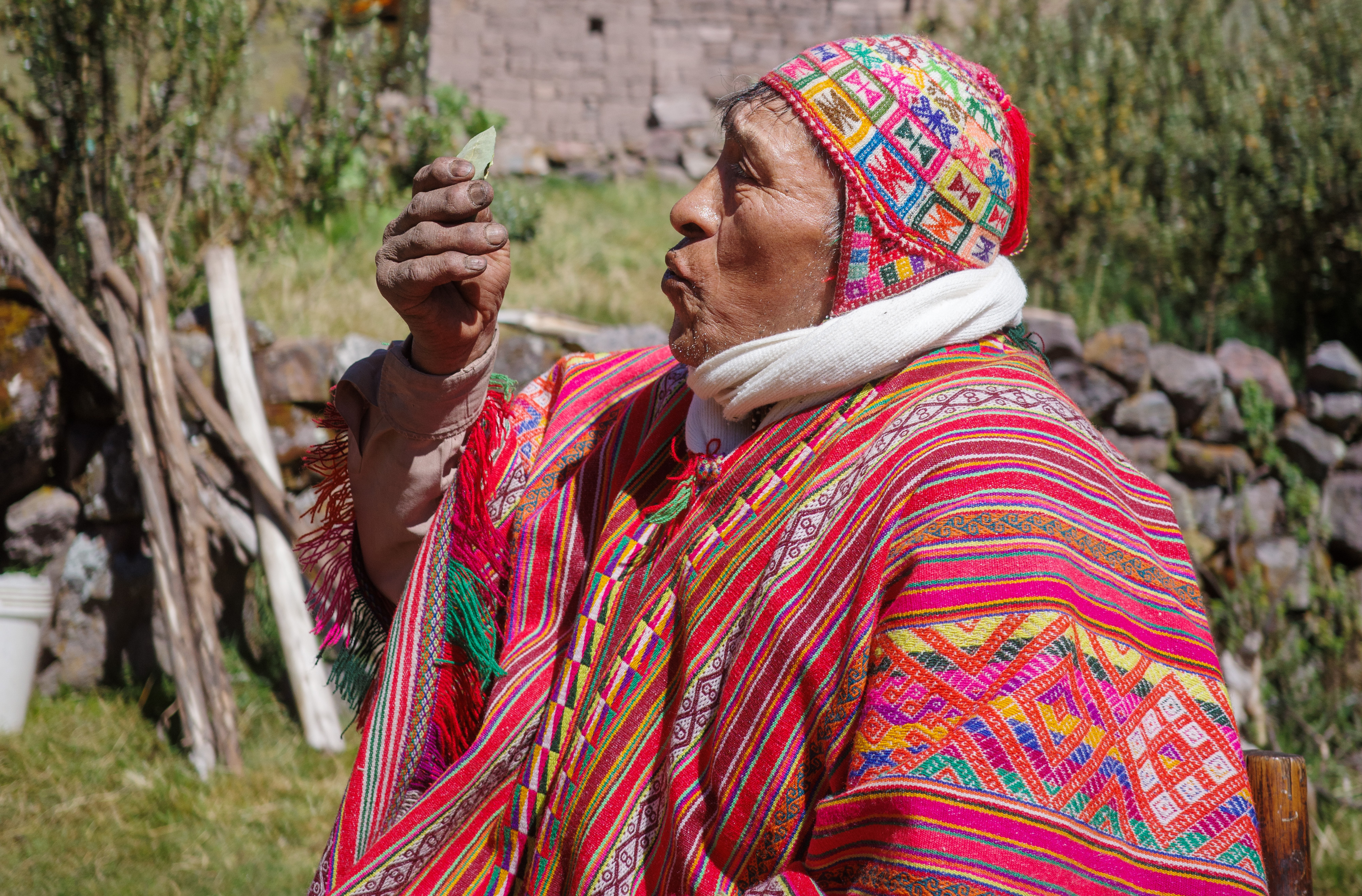
The connection to coca is still alive in communities like the one where Ruben Huaman Quispe grew up. His hometown is in Peru’s Lares Valley — a place at such high elevation that little coca is grown. But his family uses it regularly, and he was raised with a deep respect for the leaf. To him, coca was never something dangerous, it was always something very sacred. Quispe says, “This is not a drug for us.”
In the highlands of Peru, the coca leaf carries deep spiritual and cultural significance for Quechua people like Quispe, far removed from its global association with the drug trade.
“I would like them to understand that coca leaves are not bad leaves,” says Quispe. “The coca leaf is like a medicine for us.”
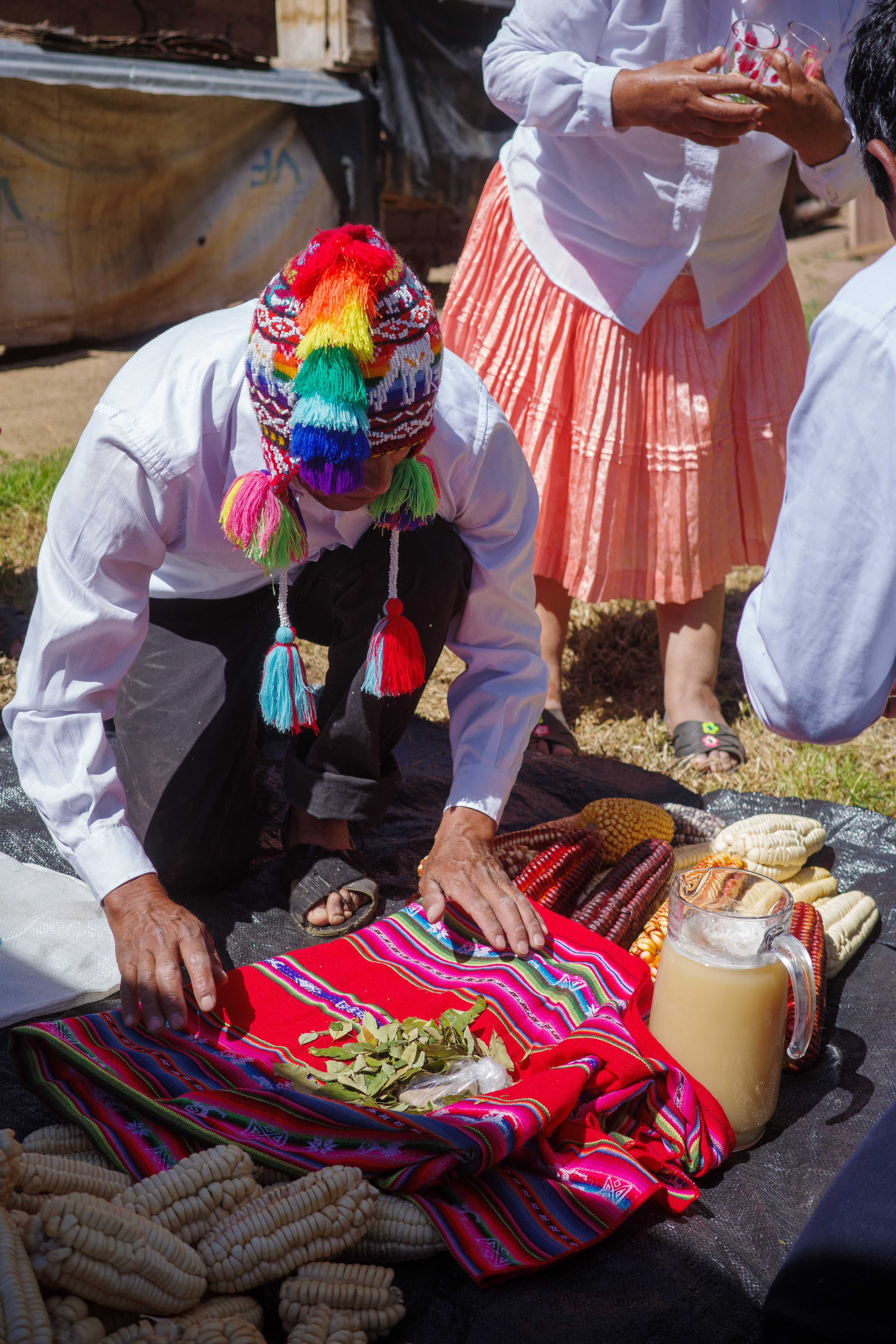
For centuries, coca has been used in sacred rituals as an offering to Pachamama – or Mother Earth, in ceremonies known as despachos, where people give thanks and ask for protection before working on their land.
Coca serves as a spiritual bridge between the physical world and the spiritual world, with Shamans using it to understand your past, present and future. The leaves connect people to the Apus — the spirits of the mountains — and are used by community members in rituals to bless people, places, and offerings, creating a spiritual connection.
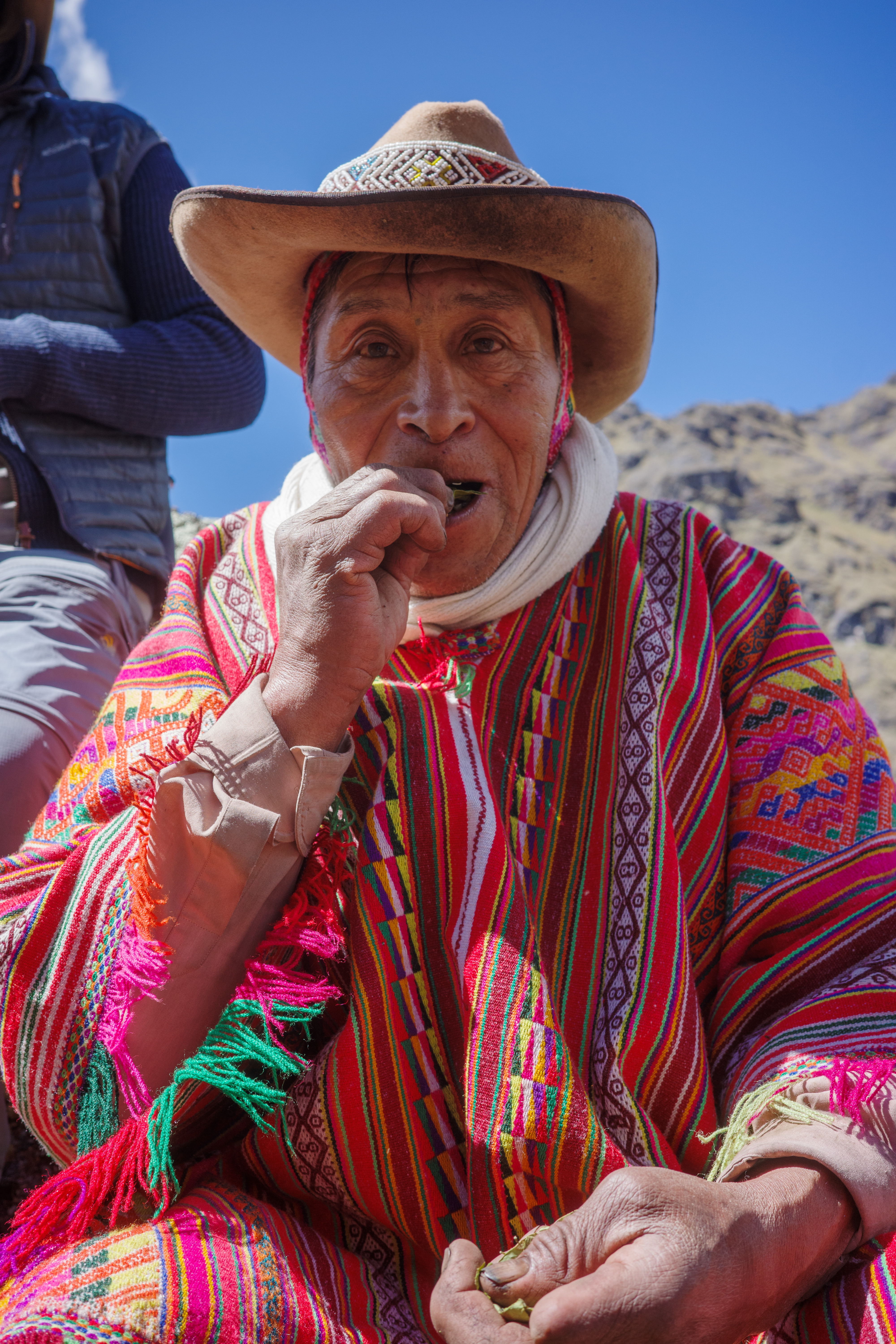
The leaf has also long been recognized for its medicinal properties, particularly in helping combat altitude sickness. This is a common illness for people not used to high elevations, and coca tea is often offered to tourists upon arrival to help ease the symptoms. Coca is also high in calcium and protein, which supports bone density and contributes to the Incas having strong teeth.
“Imagine the back in the day, Incas are chewing it everyday,” says Quispe. “They never brush their teeth back in the day, the Incas. And they used the coca leaf to clean their teeth.”
Archeologists have uncovered Incan skulls with teeth still intact after hundreds of years. Their strong dental health is believed to be a result of the daily practice of chewing coca leaves, which may have acted as a natural cleanser. The tradition reflects not only the Incas intimate relationship with the coca plant but also their deep-rooted understanding of natural medicine and oral hygiene.
Today, tourists can easily find coca-based products including coca tea, coca candies, chewing gum and infused chocolate across Peru. They are marketed primarily for their health benefits such as boosting energy and aiding digestion.
COCA TO COCAINE
But tourists who are unfamiliar with the cultural significance may hesitate to try coca products or view them with suspicion. Some mistakenly believe that coca tea could lead to legal trouble abroad, unaware that the leaf in its natural form is not a narcotic.
Coca is still largely seen through the lens of criminalization, not culture. Its sacred roots are often erased, replaced by international drug policies and public narratives that reduce the plant to its most infamous extract: cocaine.
This perception has contributed to a stigma that makes little distinction between the leaf and the processed drug. While coca plays a daily role in the lives of many Andean people, it’s often misunderstood elsewhere not as a medical or ceremonial plant, but as something illicit.
The process of making cocaine is complex and chemical-heavy. It takes around 400 kilograms of dried coca leaves to produce one kilogram of cocaine hydrochloride. The process involves large amounts of gasoline, solvents and cement. What’s left bears little resemblance to the original coca leaf — chemically, physically or culturally.
Understanding the difference between coca and cocaine isn’t just a matter of chemistry, it’s a matter of context. For people like Quispe, the distinction is obvious.
“There’s no cocaine. It’s a coffee … like a green coffee,” says Quispe.
In fact, the coca leaf only contains about 0.6 per cent of cocaine alkaloid content in its raw form depending on the leaf variety.
According to the United Nations Office on Drugs and Crime, Peru remains one of the world’s top coca producers. In 2022, the country had an estimated 95,000 hectares under coca cultivation, according to reporting by Al Jazeera.
Most coca is grown outside government control, but cultivation is legal in certain zones that the Peruvian government regulates. To participate in the regulated market, coca farmers must register with the National Coca Company (ENACO), the state agency that oversees traditional and medicinal coca use. Only ENACO-registered growers are allowed to legally produce and sell coca, a system that leaves the majority of producers operating informally reports Insight Crime.
Despite the scale of production, actual cocaine use among Peruvians remains relatively low. The International Society of Substance Use Professionals reports that about 0.96 per cent of the Peruvian population aged 15 to 64, roughly 200,000 people, reported cocaine use in the past year
Whereas, data from the 2022 National Survey on Drug Use and Health shows that 1.9 per cent of Americans aged 12 or older reported using cocaine in the past year, which equates to about 5 million people.
Most of the coca grown in Peru doesn’t stay there. It’s processed and trafficked abroad to feed the international demand for cocaine. The contrast underscores what many in the region have long argued — the problem isn’t local consumption, it’s global demand.
Aaron Ebner, co-founder of the Andean Alliance for Sustainable Development, has worked with farming communities in the Sacred Valley for over a decade. He’s working on an upcoming documentary that explores how global narratives distort Peru’s relationship with coca.
“I think the problem is that we try to treat cocaine like a Peruvian problem. And it’s actually an American problem, or a Canadian problem, whatever, a European white people problem,” says Ebner.
But despite the coca-growing communities not being directly involved in cocaine production, the violence tied to the global drug trade still impacts Peru. While farmers may only cultivate the plant, they understand the larger forces at play.
“Because they understand that it’s going to cocaine, it’s feeding the drug cartels, the drug cartels are violent actors in their communities,” says Ebner. “It’s a tense situation in those areas.”
Ebner emphasizes that these farmers are not criminals. Many grow coca for traditional use or out of necessity, navigating a balance between legal sales and black market survival.
“Hey, all I do is grow coca and I have to sell some of it legally, I have to sell some of it in the black market. But that’s how I protect my family,” Ebner recalls hearing from farmers during his time in the Peruvian rainforest.
Despite the risks, Ebner says it’s not fear of the cartel that traps growers — it’s the lack of alternatives.
“I think they feel stuck in the industry,” he says. “They’re stuck growing coca the same way that farmers here are stuck growing conventional corn. If they wanted to transition to organic corn, it would take a few years. They can’t afford to not produce and earn money from their farms for a few years.”
But while some farmers feel stuck, others are finding ways to keep their traditions alive, not just as a means of survival, but as a way of honouring who they are and where they come from.
In the Lares Valley, not far from Quispe’s home community, Julio Hancco is one of them. Known by many as the Potato King, Hancco is a well-respected Quechua farmer and seed guardian who grows over 350 native potato varieties at high altitude. Before planting, he places coca leaves on the earth, an offering to Pachamama and the Apus.
“Once they arrive, they understand,” says Quispe, referring to those who visit Peru.
For him, and for many others, coca isn’t a drug. It’s part of a way of life. It’s how they show gratitude, connect with the land and carry forward the teachings of their ancestors.