While much of the conversation around rural to urban migration in Peru focuses on economics or education, another shift is happening on the ground. In the spaces men are leaving behind, women are quietly reshaping what it means to stay.
Yesica Nina Cusiyupanqui grew up watching her family’s land wear thin. Corn was planted year after year, and the profits eroded with the soil. Like many farms in the region, theirs felt stuck in monoculture. While many men in her community have left for the cities, Cusiyupanqui stayed and tried to make something of the land she’d grown up with.
But the challenges she faced went beyond crops. When she was 15, her father died and her youngest sibling was only four. Her mother held the family together, but the pressure on Cusiyupanqui to step up was immense.
“What would have happened if we gave up?” she says now.
It wasn’t just grief they were navigating, but the uncertainty – emotional, financial, and practical. Her question doesn’t come from pity, but from a deep awareness of how fragile agriculture survival can be.
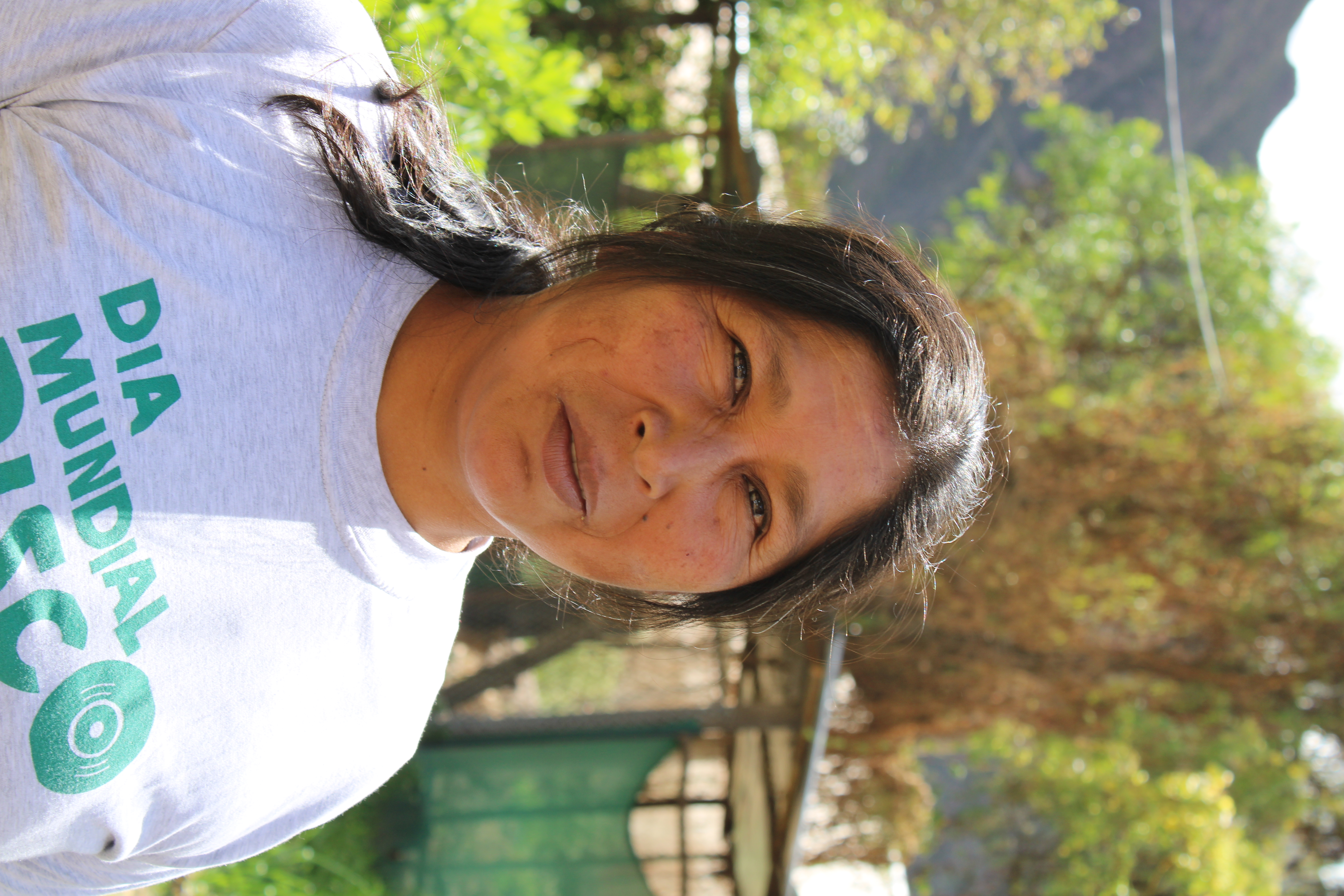
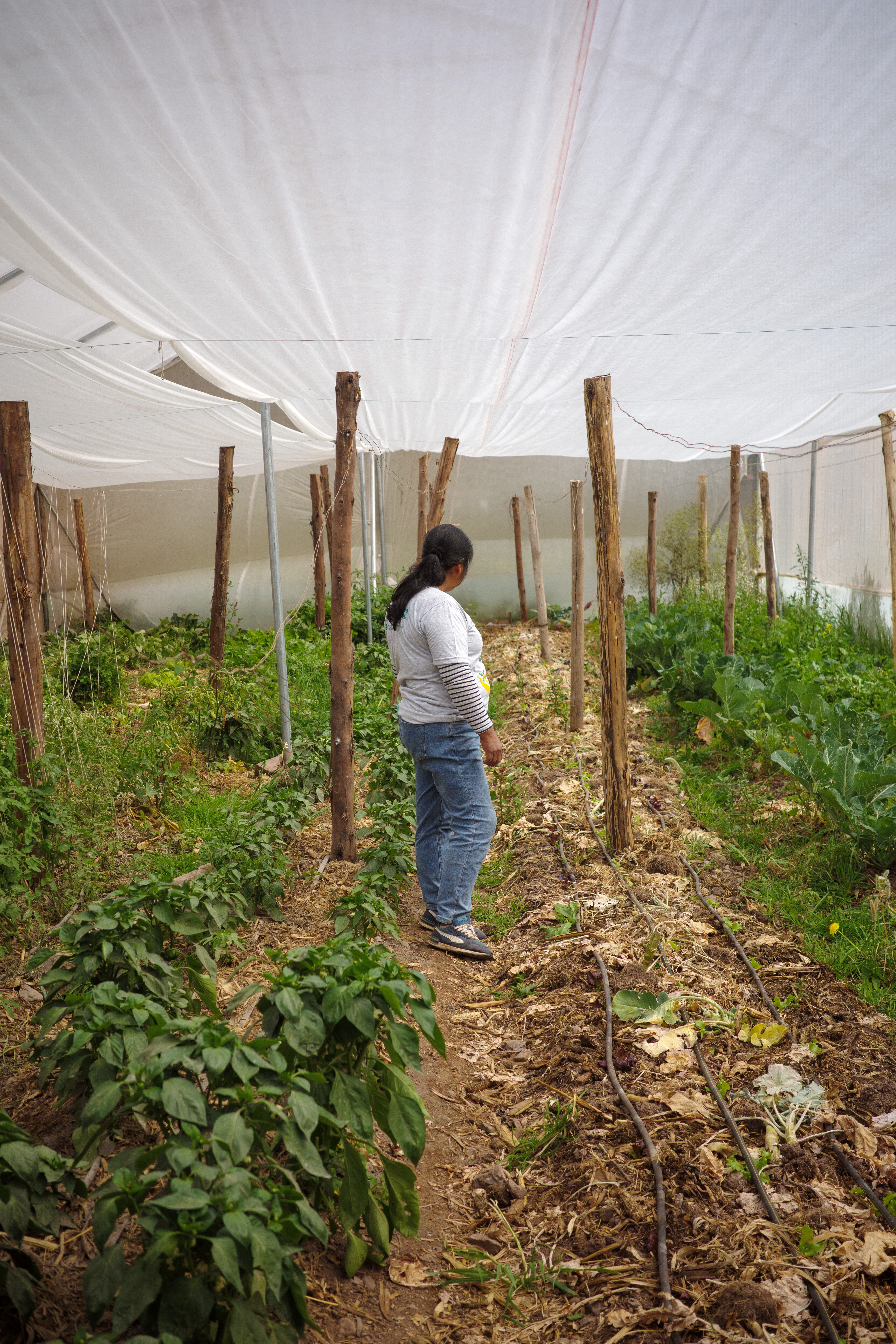
But she chose to keep going — for her family, for her land and eventually for her community.After internships in Massachusetts and California, Cusiyupanqui returned with new knowledge in regenerative farming, composting and crop diversity.
“While you’re doing things, you can teach people,” she says.
And she has. Cusiyupanqui now trains others, especially women, in sustainable practices. But transformation is slow. And keeping the farm alive was harder than building it.
“Women haven’t been visibly included in the value of this coffee. They’re doing huge amounts of work, but their names aren’t on anything. You don’t see them at workshops. You don’t hear them in the room.”
— Luke Agness
Five years in, she nearly gave up again. Pests, production losses and the pressures of commercialization made it feel impossible where selling food meant more than growing it. She had to promote herself, show up in unfamiliar spaces and navigate systems that often exclude women.
“I didn’t know anything about compost or diversity,” she says. “Now, I’m teaching others.”
What’s kept her going isn’t just what she learned – it’s the chance to pass it on.
That feeling of invisibility isn’t unique to Cusiyupanqui’s experience. Across the region, women’s work is essential but often overlooked.
Luke Agness, who works with coffee producers across the region, sees the same patterns.
“Women haven’t been visibly included in the value of this coffee,” he says. “They’re doing huge amounts of work, but their names aren’t on anything. You don’t see them at workshops. You don’t hear them in the room.”
He notes that the post-harvest labour — sorting, washing, selecting — is often done by women, but rarely credited.
“They’re the reason the coffee is good, but they’re invisible in the supply chain,” he says.
Cusiyupanqui is trying to change that. She doesn’t just teach women sustainable techniques, she hires them. Many are mothers who’ve been excluded from formal work, either because of childcare or because their labour has long been undervalued. Cusiyupanqui gives them space to learn, earn and feel confident again. She’s become a model for what’s possible, not only for women hoping to farm, but for women trying to reclaim power in a system that never saw them as farmers in the first place.
In a nearby valley, 19-year-old Rosario Mamani Huamán is carving a different path. The youngest of 10 siblings – most of them women – Huamán was the last to remain at home, supporting her parents during harvest seasons and holding together the household. Cooking, cleaning, keeping the farm running, she took on the unpaid, unseen labour expected of women in rural communities.
But once she reached age 11, there was no schooling left in her village. She was forced to leave if she wanted to continue her education. She’s now in her third year of an accounting degree, a path not often accessible to young women from her region.
“She really, really wants to help her parents,” her translator explained. “She feels bad, because they’re breaking their backs, and the other siblings haven’t returned to help.”
Many of her sisters have started families and moved away, leaving the future of the farm in question.
“She’s the only one who doesn’t want to sell it,” the translator added. “She’s the only one who knows how to work the land.”
To Huamán, the five hectares of fertile land aren’t just soil, they’re part of her identity. She hopes to help her parents transition to growing geisha, a more profitable coffee varietal. She dreams of a future where the land stays in use through a cooperative or alternative ownership model.
Her version of success isn’t about escaping her roots — it’s about honouring them. Even if she doesn’t farm full time, she wants to see the land’s special place in the lives of rural Peruvians preserved, for her parents, for her community and for the generations of women who’ve quietly held everything together.
Cusiyupanqui is doing the same — maintaining the earth for those who left, and planting something stronger for those still to come.