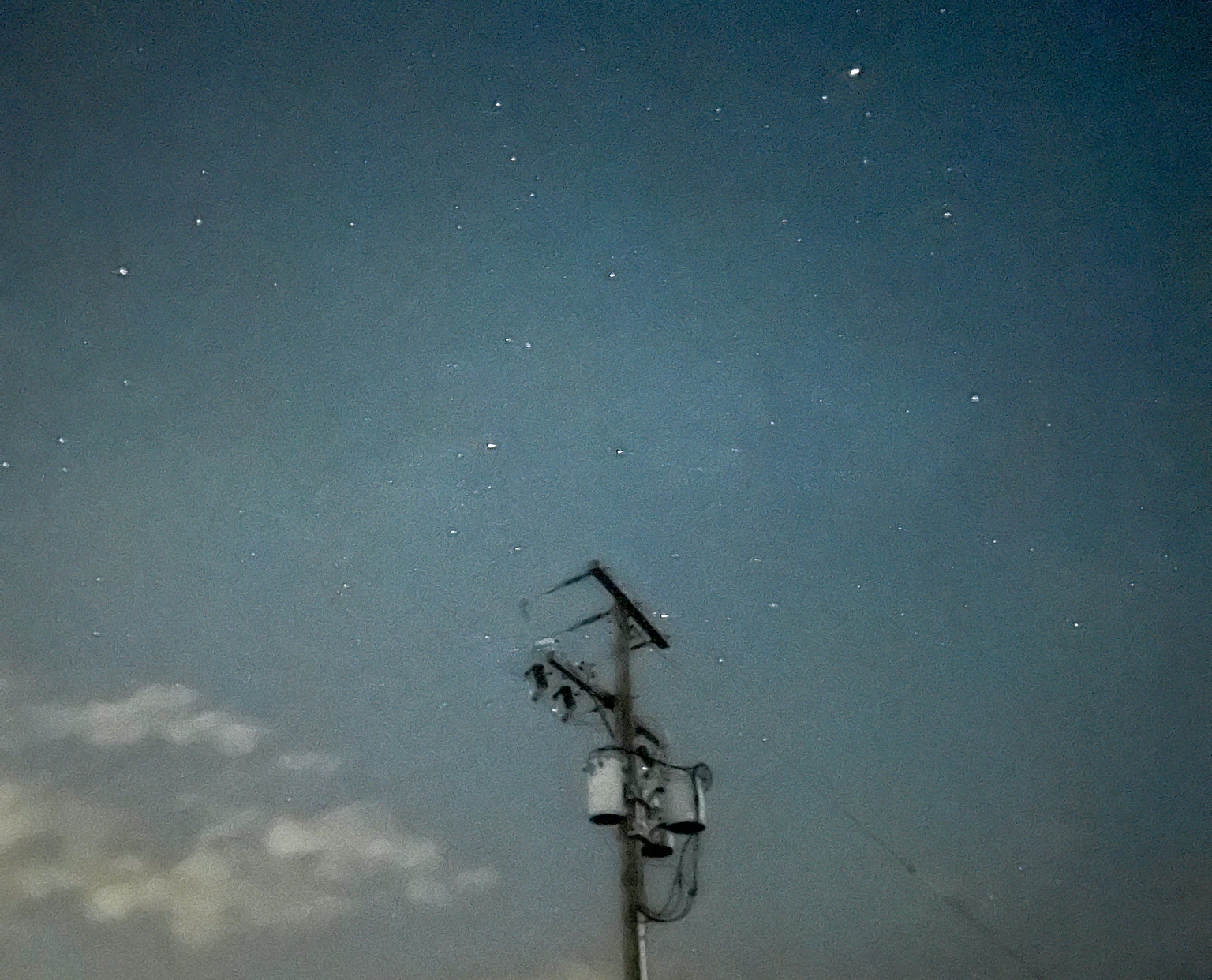
Hidden beneath a blanket of stars covering the Alberta prairies, evening school field trips to the Rothney Astrophysical Observatory presents an eye-opening experience.
The observatory is located 43 kilometres outside of Calgary– a city among the most light-polluted cities in the world. The observatory was the last major observatory in Canada to be granted protection against light pollution regulations, and it is one of the few places locals can see a sight many have never seen before: The Milky Way.
For many locals, it’s their first encounter with the grandeur of the night sky — a sight Education Specialist at the University of Calgary’s Rothney Astrophysical Observatory, Jennifer Howse, gets to witness regularly.
“It was quite incredible for them to get out of all of that light pollution, and they were able to look up in the sky and to see the arm of our galaxy overhead. It was quite spectacular. They were just blown away. These kids are 11 years old, and they have not had that natural connection to the night sky. It’s an extraordinary thing for them, and I think that’s [light pollution] a terrible shame”.
These children are not alone in their lack of experience seeing our night sky. It is estimated that 80 per cent of North Americans have never seen the Milky Way, which would have been so easy to see many years ago, without the millions of artificial lights that now pollute our planet and atmosphere.
For many, the chance to witness the Milky Way is more than just a field trip — it’s a reminder of what we’ve lost to modern life, and what we might still protect.
What is Light Pollution?
“Light pollution is light that’s unwanted, so it’s artificial light that trespasses,” says Howse.
This artificial light makes the sky appear abnormally brighter than it should, blocking out our view of the upper atmosphere. In large Canadian cities, more than 95 per cent of stars that should be able to be seen by the naked eye are no longer visible.
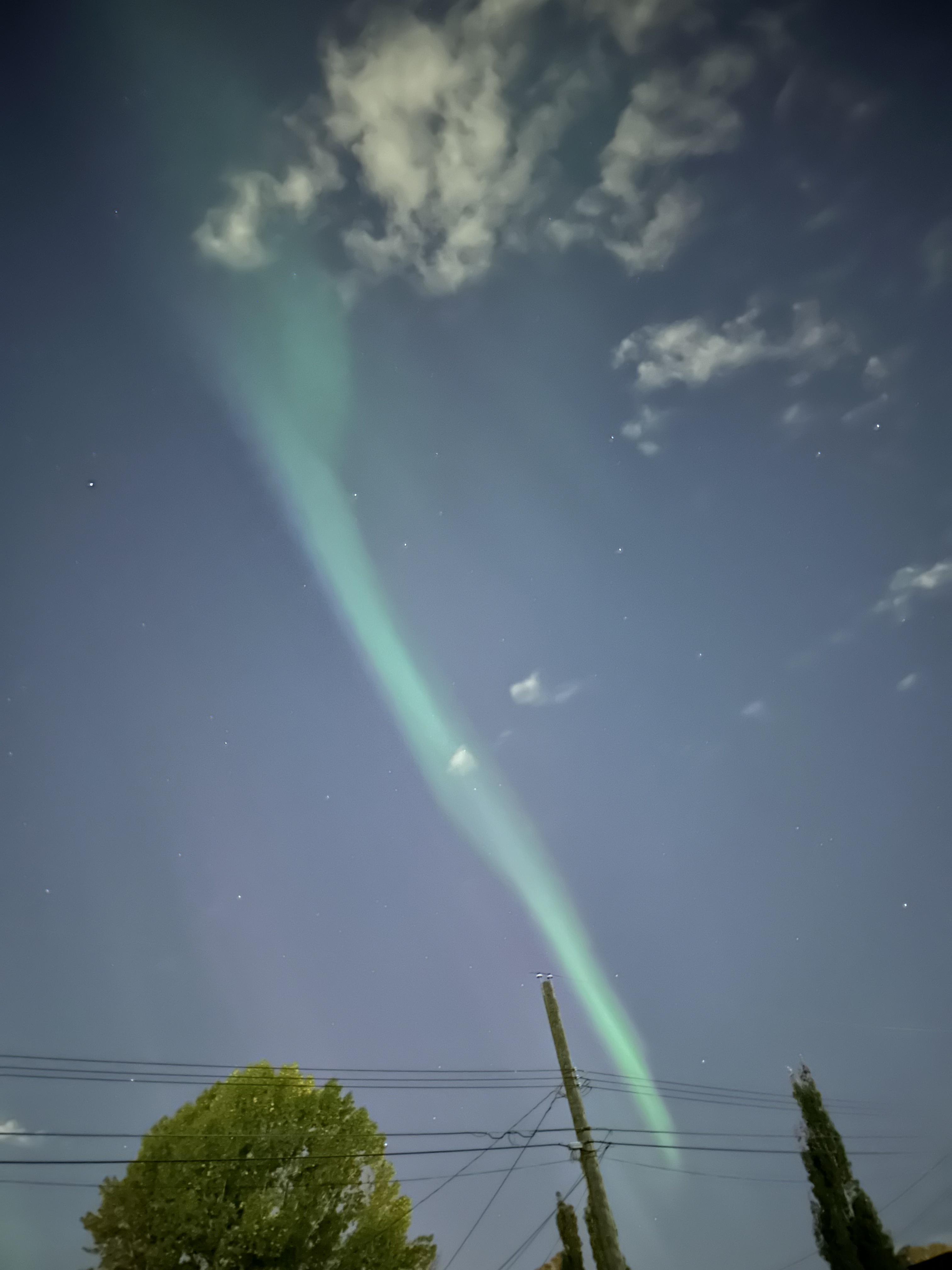
“Since 2011 light pollution has increased year over year by 10 per cent per year,” says Aparna Venkatesan, a cosmologist, astrophysicist, and professor of physics and astronomy at the University of San Francisco. “That means, in layperson terms, over the lifetime of a child going from age zero to 18 they will see a factor of two and a half to three less stars in the sky, which is crazy.”
This artificial light that we often see encapsulating cities from afar, is not just an interesting sight, it is seriously harmful to the environment, scientific research and the health of humans and animals alike.
“It really throws off human and ecological health as far as biodiversity, because it really impacts living ecosystems and really impacts migrations of pollinators,” says Venkatesan.
Light pollution has a direct impact on our health. Research has shown it can disrupt our circadian rhythm, and it is linked to a range of conditions including sleep disorders, neurological degeneration and even certain cancers and risks for Alzheimer’s disease. But light pollution doesn’t just affect humans, animals all around the world are negatively affected.
Excessive illumination is a huge threat to migratory birds, as it can change migratory patterns and foraging behaviours. Birds can become attracted to well-lit areas and end up circling sites of artificial light for hours leading to exhaustion, fatal collisions along with making them vulnerable to predators. It is estimated that light pollution contributes to the deaths of millions of birds every year. Marine life is also affected where sea turtle hatchlings often become disoriented in the presence of artificial light near their nesting areas. They crawl towards land instead of the ocean, and many die due to dehydration or fall victim to predators.
While the physical effects of light pollution have been well-documented by doctors, scientists and ecologists across the world, one perspective is often left out of the conversation: what it means to lose our emotional, spiritual and cultural connection to the skies.
Culture and Spohtsi (Sky)
The night sky has been a crucial part of the story of humanity, both in science, culture and religion. It is an important aspect in many stories passed down through thousands of years in Indigenous communities around the world. In Christianity, the star of Bethlehem was a sign of the birth of Christ, the symbol of Islam is a crescent moon and star symbolizing the guidance of God throughout life, and the stories behind the stars and constellations have significance in Hinduism.
At Blackfoot Crossing Historical Park — a museum in southern Alberta near the site where historic Treaty No. 7 was signed — Kent Ayoungman, a Blackfoot ceremonialist and language coordinator, shared insights into the importance of the night sky to the Siksika (Blackfoot) Nation.
“The youth of today are the elders of tomorrow, and they will need those stories to tell. But if we take away the environment for those stories, how will they share it?”
The museum, which overlooks a winding river and vast prairie landscape, houses artifacts that reflect thousands of years of Blackfoot history and a connection to the land. One prominent artifact on display in a special temperature-controlled case is the regalia of Chief Crowfoot, an important 19th-century Blackfoot leader, which had been displayed at the Royal Albert Memorial Museum & Art Gallery in England until its repatriation to the Siksika Nation in 2022. Ayoungman was part of the delegation that travelled to England to bring the regalia home, an event symbolizing the ongoing reclamation of cultural heritage.
Other artifacts in the museum highlight the enduring relationship between the people of the Siksika Nation and the night sky. One rock on display features ancient etchings of stars and constellations, including Ipisowahsi (the morning star). This star, alongside a buffalo head etched into the stone, underscores the connection between celestial patterns and ancient practices like the buffalo hunt.

“Our history could go far back as how all the planets came to be in our way as Blackfoot,” says Ayoungman. “In our prayers, we call Natosi, Ko’komikison, Ipisowahsi, meaning, we call on the sun, we call on his wife, the moon, their son, the morning star. And eventually, they had a grandson, the mistaken morning star (Pahtsipisowahsi). So those are the main spirits that we call on for help in our life”
Representations of the night sky are everywhere in the museum. Prints of different tipis hang from the ceiling, showing the different styles featured on many local designs. The designs are very specific in their nature. The top of the tipi represents the Spohtsi (sky or the heavens), the middle of the tipis features life on earth, with many featuring animals, and the bottom represents the earth. Many of the designs at the top of the tipis depicted the constellations of Pleiades and Ursa Major. Blackfoot stories that tell the origin of these constellations are both stories that serve as reminders for parents to cherish their children.
“Our relationship with the Blackfoot and the night skies, it’s a sacred thing, because it helped our people to survive. It taught our people how to hunt the buffalo. It taught our people how to raise our children, to cherish our children. It taught our people a lot, a lot of sacredness comes from the nighttime skies,” says Ayoungman.

These ancient stories and connections to the night sky have been passed down throughgenerations. Ayoungman says he fondly remembers staying awake during the long nights in winter to hear the stories of the stars as his grandparents and mother shared these tales when he was a child. Access to an unpolluted sky remains essential to sharing this folklore.
“If we’re not able to see the night skies, I’d hate to resort to using pictures and videos to talk about our stories. It’s way better to see them with the naked eye and sit there with people to talk about our relationship to the night skies. I’d hate to see to get to that point where we can’t see night skies above us”
Pollution from above
The glow of cities caused by artificial lights isn’t the only form of light pollution impacting our world. There are two kinds of light pollution: wasted artificial lighting here on Earth, and the light reflected off the thousands of satellites that orbit our planet.
Samantha Lawler, an associate professor of astronomy at the University of Regina is something of an expert on this issue. In her research, she works to find new Kuiper Belt objects, which are small, icy bodies that are found beyond the orbit of Neptune. Research into these objects helps scientists understand how the solar system was formed and evolved into what it is now. Recently, she has faced a major challenge in her research — these objects are getting harder to find and observe because so many satellites are blocking her view, all of them much brighter than the objects she is trying to study.

Currently, there is very little government regulation on satellites, and it is estimated that there are over 10,480 active satellites orbiting the Earth, with one in three owned by Elon Musk. These satellites create light pollution as they reflect sunlight onto the Earth and pose a huge problem for scientific research as they block views of space.
“Every single observatory in the world is being affected by this,” says Lawler. “It’s really bad, that will make astronomy research as we know it now impossible.”
Despite astronomers around the world voicing their concerns, this problem is only expected to get worse. Elon Musk’s company, Starlink, is planning to launch 42,000 new satellites in the next year.
“Our prediction was that on the prairies, in the summertime, one in 15 stars in the sky will actually be a moving satellite,” says Lawler.
Whether government organizations and private companies should be allowed to pollute our sky with satellites is a widely disputed issue.
Howse says, “It could be considered almost a form of colonialism in the fact that people can put as many satellites as they want in the sky or put in artificial light without regard for anyone else. In that way, it’s really a human right. We should be able to access the natural world.”
A human right?
When it comes to the negative effects of light pollution, not everyone is equal.
“I would even tie it to arguments of sovereignty and economic sovereignty when there are lots of studies on how the most marginalized communities tend to have a lot of high levels of light pollution and noise pollution with highways going through them and very bad lighting. While often the fancy neighbourhoods get the really good lighting,” says Aparna Venkatesan.
While it may seem surprising that a seemingly abstract problem like light pollution can be a justice issue, there’s evidence to support that is indeed the case. Studies have shown that the effects of light pollution disproportionately affect minority groups with Americans, who belong to racial minorities, are exposed to two times the amount of light pollution in their neighbourhoods than white Americans.
“I would say, if I had to give one overarching principle to why I think of it as an essential human right, it would be the right to natural darkness that is really a reclamation of our fundamental relationship with the skies,” says Venkatesan.
In 2022, the United Nations Human Rights Council declared that access to the environment is a human right, specifically, access to a clean and sustainable environment. The Canadian government took crucial steps to acknowledge access to the environment as a human right in 2023 when they amended the Canadian Environmental Protection Act of 1999 to recognize “that every individual in Canada has a right to a healthy environment.”
Even though access to the environment is increasingly recognized as an essential part of human life and rights, little has been done to regulate light pollution and protect night skies, both here on Earth and in the regulation of the thousands of satellites in our atmosphere.
“It’s an essential human right for health and self-determination, but it’s an essential human right for our identity as well as knowledge holders, as practitioners of cultural sky traditions,” says Venkatesan. “The youth of today are the elders of tomorrow, and they will need those stories to tell. But if we take away the environment for those stories, how will they share it?”