
In 1914, the Ogden community was not yet considered to be part of the city of Calgary when two Chinese men, Eng Hon Quan and Eng Shon Yun, decided to construct a building that would come to be known as Ogden Block and open a laundry business. In the late 19th and early 20th century, Chinese people faced extreme racism in Canada and were not often welcomed by the largely white community outside of Chinatown. It was unusual that Quan and Shon built their business outside of Chinatown where they should have been accepted by newcomers like them. Instead, they would have faced extreme racism and backlash for being Chinese.
Brick-by-brick, Quan and Shon built their business from the ground up using materials that were significantly more expensive in the early 20th century. Many speculate that Quan and Shon intended their structure to serve the Ogden community long after they were gone.
Hong Lee Laundry, a two-story building that sat in front of the Canadian Pacific Railway, provided CP workers and those in the Ogden area with laundry facilities through the storefront on the first floor. On the second floor, Quan and Shon ran a boarding house with 18 rooms that offered Chinese immigrants living accommodations.
Significant historical buildings, similar to the one built by Quan and Shon, can be found all over North America — each with its own unique story connected to the identity of a community and the shaping of a society. However, these are also old buildings often awaiting their untimely demolition, and along with them, the stories of a rich past.
After two years it had opened, Quan and Shon decided to close their doors to the public and nobody knows why. In 1916, amidst the Temperance Act that allowed governments to ban the sale of alcohol, Ogden Block was used as a polling station for Albertans to vote in favour or against the Provincial Prohibition of alcoholic beverages.
During World War I, Ogden Block served as an extension to the Ogden Military Hospital. When the main hospital building became overwhelmed with injured, sick and dying soldiers, Ogden Block opened its doors to those who had served.
From 1919 on, Ogden Block was home to countless families, taking a bit of a break in 1930 when it housed an ice cream parlor. Over that same period the building was passed from owner to owner until 2013.
Tony’s Chapter
The CEO of Mount Royal Capital, Tony Dinh, bought Ogden Block in 2013 with a dream of revitalization, renovation and repair of both the tarnished structure and reputation of the building due to the prior tenants. Dinh, who is of Vietnamese descent, not only saw Ogden Block as an opportunity to connect with his Asian heritage, but to also honor the two Chinese men who designed and constructed the building.
“The Chinese businessmen, they had an idea and they built this building and it fell in our lap. Because we’re Vietnamese and Chinese people came before us,” said Dinh.
A few years ago, a video was posted on the Mount Royal Capital LTD website with Dinh standing in front of royal red doors blushing through the murkiness of the overcast winter day as a sprinkling of powdered snow blanketed the lawn. Fresh black paint borders the windows creating a sharp contrast to the dull gray paint peeling off the bricks. Planted directly outside the brick building is a naked tree dancing in the wind, playing peek-a-boo with the house number, 7044. Vibrant striped awnings flicker in the wind, while Dinh stands proudly in front of the renovated structure ready to show Calgarians how he has managed to completely turn Ogden Block around while also maintaining the architectural integrity of the building.
“We repaired it, we revitalized it. Really changed the tenant profile around here, and caused a community where people want to interact and really start to make friends around here,” explains Dinh in the video.
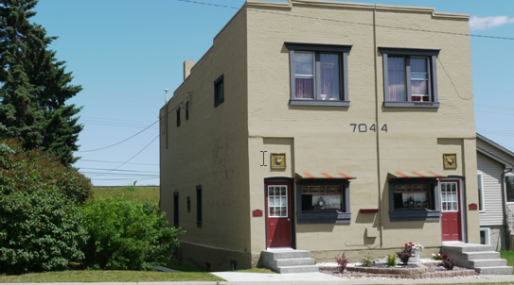
Walking down the path towards the back of the building, naked bushes define property line from property line. The crisp wind snaps the peeling paint from the brick creating ghastly noises, almost as if the building is reciting the secrets and stories from those who came before Dinh.
Homeless people used to take refuge in the bare bushes, but a part of the revitalization process for Dinh was making the hard decision to deny the unhoused people access, creating a safer environment for tenants. Stepping inside the back entrance, a wave of newness hits those standing at the base of a staircase. Fresh coats of paint line the walls, original laminate wood floors run from length to length. Creeping up the stairs there is vintage art that represents the building’s history that hangs on the walls
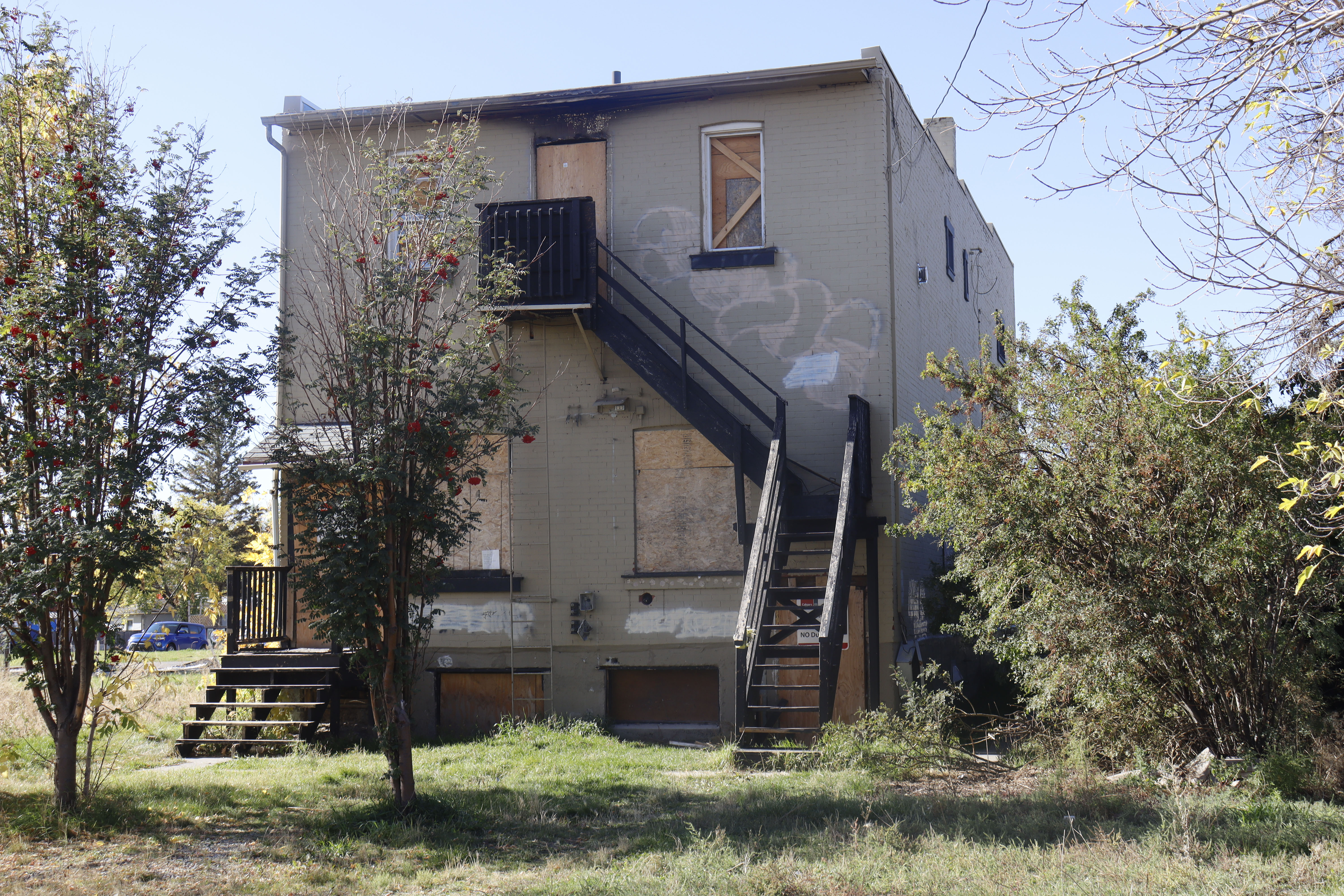
Proudly walking out to the fire escape, Dinh opens the door unhesitatingly to expose the CP Railway metres away from the building. Taking a moment to stand on the century-old stairs, he begins, “The Green Line LRT is going to be right here,” Dinh explains, pointing to the back alley. “And it is going to stretch all the way here, and up to the end of the block.”
Dinh, with a sparkle of delight in his eyes, says he wants people to be able to experience this building and everything that it has to offer.
In 2021 Dinh learned more about the Green Line LRT and received back-to-back offers from the City to sell the property where Dinh felt like his hands were tied.
“They told us that, you know, if we don’t accept this offer then they’re going to expropriate us, and pretty much they’re going to force the sale,” explained Dinh. “Eventually, we’re like, ‘Well it’s going to drag us through years of litigation and a lot of lawyer fees and different things.”
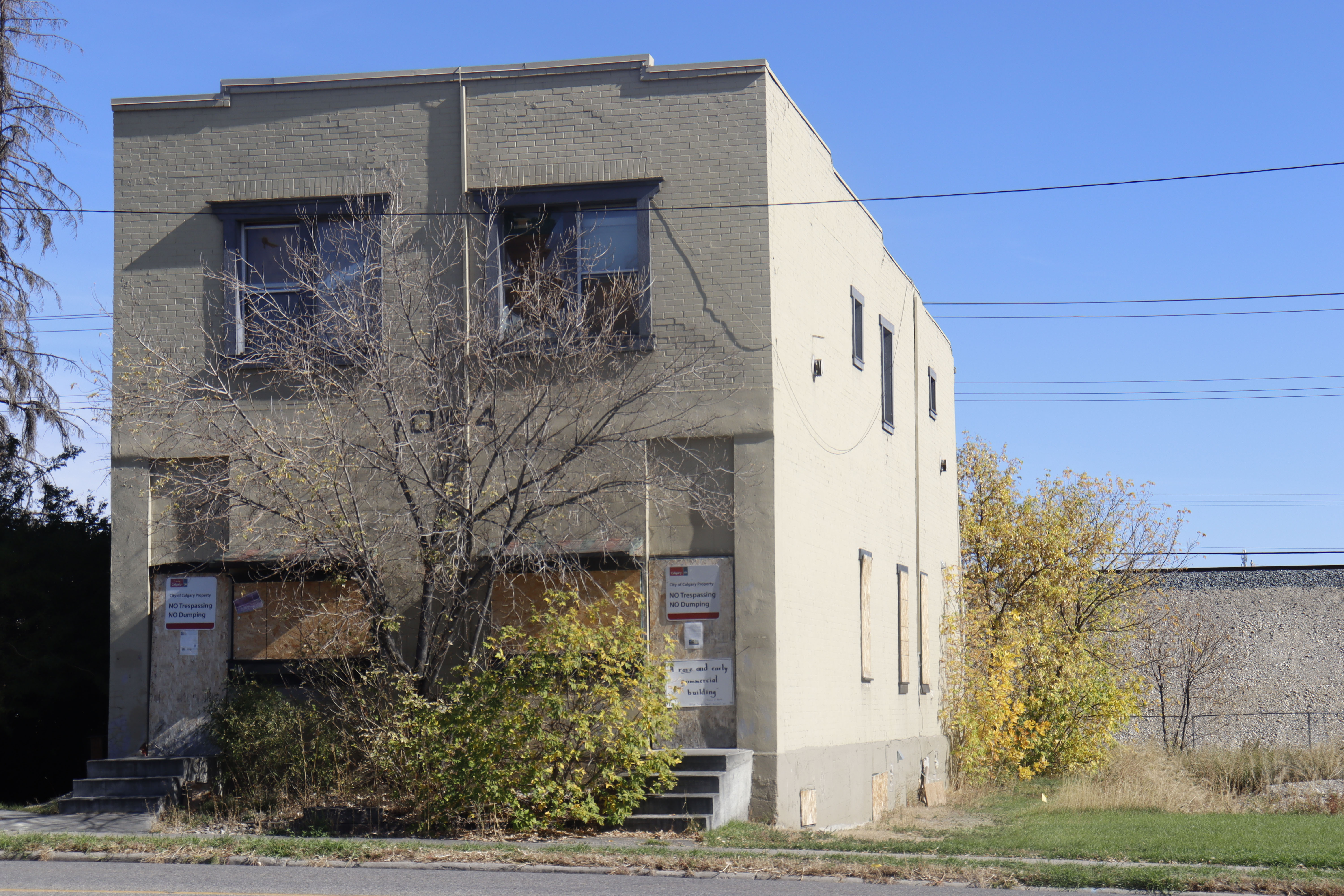
Today, tattered, vandalized, and boarded up, Ogden Block sits vacant just a few years after Dinh had breathed life into it. Every entrance is beaten and boarded up, the windows shattered. The building walls are covered with scorch marks from a fire set ablaze by the unhoused community. And the old wooden stairs creak in the wind, while a CP railway train races by.
“I think it’s super unfortunate because there’s eight units, and there can be eight people, or eight families living in there, and especially in a housing crisis. I know what’s possible with that building,” said Dinh.
Bonny’s Chapter
A massive gust of wind comes whipping around the building, smacking Bonny Warbeck, head of the Ogden-Millican Heritage Group, in the face. She pulls her sunglasses down to cover her eyes from the dust as a CP Railway train rushes by. Warbeck is upset with the City of Calgary for threatening to take out a significant piece of history.
One day a few years ago, after Dinh had fixed-up Ogden Block, Warbeck was walking along Ogden Road when she came across the building and stopped to admire it. The family who occupied the unit had model trains and figurines in the windowsill, which was a play on the history of Ogden. The curtains in the unit were coordinated with the vibrant awnings that also played into the hardworking vibe of the community. The big, rectangular brick building was alive with life and well taken care of at that point.
A couple of years later, Warbeck was driving through the neighborhood when she saw Ogden Block was all boarded up and her mind began spinning with images of the once beautiful building. She immediately began doing research on the building to see if it was considered historical with protections against demolition. She began contacting whoever she could, starting with the community association where she then found out the city owns the building. After having contacted the City of Calgary, she was confronted with the news that Ogden Block is not considered to be a historical landmark, therefore it has no legal protections against demolition.
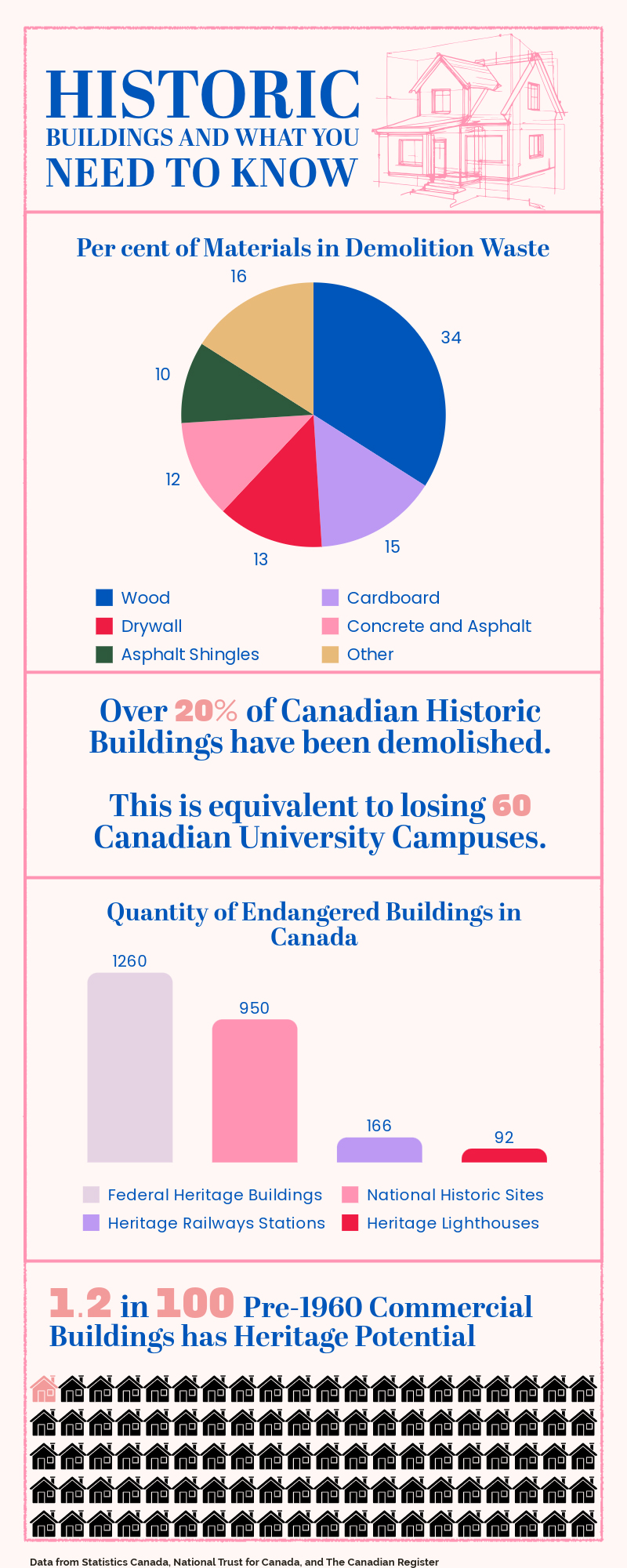
Normally, the City is responsible for going through buildings and determining which have historical value, which never happened in the Millican-Ogden community. The Millican-Ogden heritage group took matters into their own hands, weeding out 120 buildings that are now in the City’s and Heritage Calgary’s database.
“Two historians looked at it,” said Warbeck. “One was looking into the history of the building, the other was looking at the building itself, the physical structure. They ended up having, I think, an 82 or 84 page report, all about how significant this building is.”
Consequently, Ogden Block is now recognized for its historic value, but that does not ensure the survival of this building.
According to Heritage Calgary, the Inventory of Evaluated Historic Resources is a database where all the buildings deemed to have historical significance and status are identified. Although Ogden Block is now part of that inventory, the City of Calgary is still within its rights to demolish it if they see fit.
“I often think, why does this matter so much to me?” revealed Warbeck. “And I think about the people who did this. I feel for those two Chinese guys who did all that, and who’ve been dead for how long? I feel this empathy for them that they did this. They poured their heart and soul into this. And I think of the people who were the soldiers who were recuperating, the medical staff who were doing whatever they could to keep these guys going.”
The Architect
Eric Rodrigues, principal and heritage architect at Boldera in Toronto, is an advocate for the restoration of pre-existing structures. Adaptive reuse is a sustainable technique employed by Boldera that allows the architect to keep the structure true to its architectural roots while introducing new design elements within the building; saving the owner the extra expenses of demolition and reconstruction, while also saving the environment. This is similar to Dinh’s approach with Ogden Block.
“Buildings in general take 50 to 80 years to pay off their carbon footprint, that is mostly associated with the demolition activities in the landfill,” said Rodrigues. “So, if a building is already there and a significant portion of its structure can be salvaged, we’re reducing our emissions drastically.”
Rodrigues said there are lots of vacant buildings of all kinds that have the potential to be cleaned up and repurposed.
“In many cases, people don’t know what to do with them. They’re just standing there, waiting for someone to either buy the property and propose to demolish them, but they could be creatively repurposed and brought back to life.”
Although many older buildings seem to be candidates for renovation, many are thought to be foundationally unsound. In some instances, like when a building is left to weather the elements with no maintenance, this is true. However, many other older buildings are made of superior materials compared to the buildings constructed today.
The Blouin Family
For centuries, people would come from all over the world to Ste-Anne-de-Beaupre, a town just outside of Quebec City to participate in an immersive experience provided by the Cyclorama of Jerusalem. Before movie theatres were the global craze, cycloramas were facilities that provided visual entertainment, in the form of a panoramic image inside a giant cylinder. Art or photographs displayed on the walls of the cylinder gave patrons the feeling of actually being at the famous site, oftentimes equipped with a stage alongside panoramic art. Commonly, the massive cycloramic paintings and rotunda (otherwise known as the building) would be packed up and would go on tour around the world to get optimal viewing of the remarkable art.
Since 1957, the Blouin family has invested everything they have in ensuring the success of the Cyclorama of Jerusalem, their family business. Day after day, the Blouins would work tirelessly to fulfill the commitment of an immersive experience they promised their guests. The Cyclorama of Jerusalem, a once profitable and lively business, is now in the process of being resuscitated.
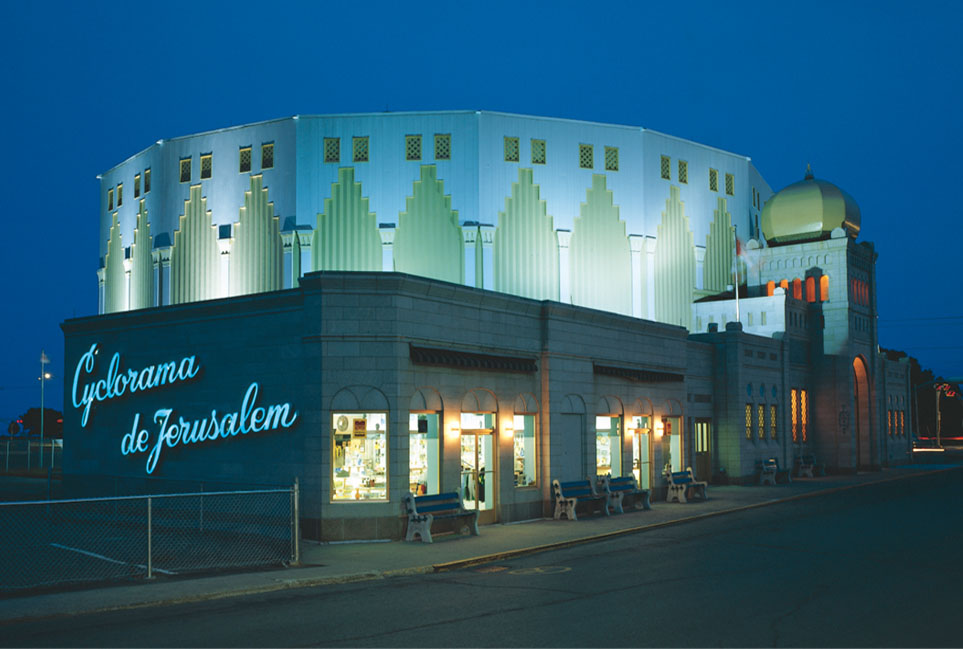
Canada’s only cyclorama: the Cyclorama of Jeursalem in 2024. Photo: Courtesy of Pierre Blouin
Unable to make ends meet and struggling to draw attention back to the cyclorama, the Blouin family decided to make a difficult decision and put the business up for sale in 2015. Nobody showed any interest in taking over the historic site for several years.
Then, in 2019, the government of Quebec urged the Blouins to get a historical assessment on the cyclorama and its art. After being declared historically significant, the government offered the Blouins a portion of money that was meant to cover some of the repair and maintenance costs.
Having no income from their business since they had closed their doors, the government pulled out of their deal covering 40 per cent of repair and maintenance costs after having the roof repaired.
Although the cyclorama and the art it encapsulates have historical protections and cannot be demolished, Blouins find themselves in a situation where they cannot keep the business going and cannot also pay the bill.
“When we sell, we have to refund the government with interest,” said a member of the Blouin family. “We have to pay 10 per cent interest by year on the $450,000 cost of the repair.”
Business has come to a steady standstill as nobody today truly understands or appreciates the concept of a cyclorama. The Blouins struggled to keep the business afloat prior to the large debt, but now they have this added pressure of paying the loan back, which seems impossible due to the state of business.
“Because people don’t know what a cyclorama is, because it is the only one in Canada, they don’t understand what it means for the family,” said Annie Levesque, the Blouins’ business partner. “We do a good job for now. It’s not enough. It’s not enough to pay that big bill.”
At one time the cyclorama was a staple in Canadian society by building community through art and religion. Now it has become an intangible dream. The Blouin family has looked to the community for help but found minimal support. As such, the Blouins are unsure about the future of the Cyclorama.
Buildings are special. We attach the intangibility of our memories to the four walls that surround us, finding too much certainty in the assumption that the building will always be there. Structures are specifically constructed to make history, and then come tumbling down. Nonetheless, historical buildings are the foundation a community is built on, holding generational identity in each coat of paint.


