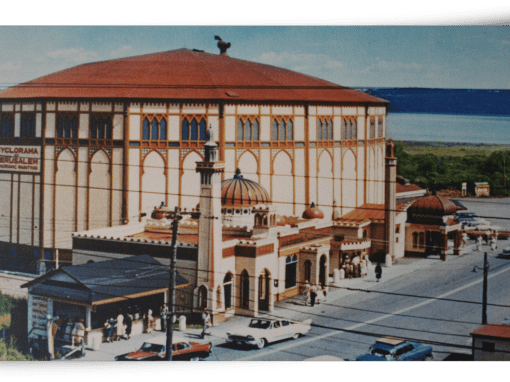
The lobby isn’t big enough. It’s a Tuesday afternoon, and the waiting area for the Calgary Centre for Newcomers is filling up fast. A few single chairs are left free, because most of the crowd working its way through the queue are with family. A bench is pushed way down a hallway, it’s mostly full now too. People buy odds and ends from the café so that they can snag a table, and somewhere to sit down. Kelly Ernst, Chief Program Officer of the Centre for Newcomers, says it’s a slow day.
Calgary is Canada’s fastest-growing major city. The population grew by 96,000 in 2023, the largest year-over-year increase ever recorded by StatsCan. That growth isn’t slowing. The municipal government expects 62 new residents to arrive every single day through 2027 — a number that appears to be both daunting and potentially an underestimate.
Many of those new residents are newcomers, defined by the Canadian government as “an immigrant or a refugee who moved from their country of origin to another country.”
“The stereotype is Alberta is really a redneck province, that is, very racist and homophobic,” said Ernst. “But when you talk to people that actually live in Calgary and you talk to newcomers here, that’s not how they’re describing this place. They’re actually describing a safe place, a fairly welcoming place, and a place that’s allowing them to get set up.”
Calgary’s population was made up of 31 per cent immigrants or refugees as of 2022, and the city has seen several large waves of migration since StatsCan captured that statistic. That ranks Calgary as the third highest rate of newcomer per capita in Canada, below only Vancouver and Toronto.
“In the last two years, 200,000 people have moved here,” said Ernst. “In the last year alone, the Centre for Newcomers saw over 50,000.”

Kelly Ernst is the president of the End of the Rainbow Foundation, which puts together sponsorship circles to help LGBTQ+ newcomers settle in their homes. Photo:Kobe Tulloch
Ernst has been assisting newcomers for more than six years. He’s been doing human rights-related work in Alberta for the last 30. He is used to working with people in their most vulnerable state. His handshake is incredibly gentle, and his job keeps getting harder.
Immigrants and refugees face shortage of basic needs
The centre gets no warning on any given day how many people might walk through its doors asking for help, and the unprecedented numbers in recent years have been difficult to manage. The waitlist for one-on-one language lessons is roughly 1,200 people long. While staff from the centre speak a combined 70 languages, they’ve served newcomers from 140 countries, who speak 99 different languages. Refugees frequently lack basic necessities, like bedding, kitchen supplies or items for personal hygiene. These are nearly impossible to keep in stock.
John Onochie migrated to Calgary from Nigeria last year. In early November 2024, he referred a friend to the Centre for Newcomers to get winter clothing for herself, and her one-month-old newborn. She was told she had to wait until December; they had already run out of that month’s supply.
“Some of us are coming from places where the weather conditions are the opposite of what you have here,” said Onochie. He landed in Canada in the middle of winter himself. “I was scared to go out. The cold was too much. Even while I was inside, I had to dress myself very well.”
Before November ended, Calgary had a record-breaking snowfall.
When waves of both Ukrainian and Afghani populations arrived in the city at the same time, it was the most challenging period in Ernst’s career.
The Afghan and Ukrainian waves were both examples of primary immigration — groups arriving from their country of origin directly in Calgary. The city also ranks first in the nation as a hub for secondary migration.
“As Canadians, as Calgarians, we can do better. People arrive at our airports, and the best we can offer them is a map of our shelters.”
These waves were in much greater numbers than the Centre for Newcomers normally handles. The Afghani crisis was especially challenging, given the combination of great cultural divides and a population with little to no English-speaking ability. Entirely new support systems had to be rapidly developed upon arrival. New language training programs, new teams that are both culturally and linguistically fluent enough to help the asylum seekers had to be put together. The strain was so intense the centre had to rely upon the goodwill of private donors to finance the development of these new support services.
Cost and shortage of housing a desperate problem
Newcomers who arrive in Vancouver or Toronto frequently find themselves priced out of the rental markets. While those who land in Montreal often struggle with the dual language necessities to make a living in the city.
Support services issues are often exacerbated in cases of secondary immigration. If one was on a waitlist for language lessons in Toronto before being priced out of the city, they are then forced to the back of the line when they come to Calgary. Government support for newcomers is tied to incredibly short timeframes. Being forced financially to restart increases an already dangerous precarity.
The sheer volume of migrants isn’t the only complicating factor. Over the last six years, work by the Centre for Newcomers has increasingly focused on refugees that currently amounts to about 40 per cent of those they support, which isn’t always easy to provide.
“There’s also a big difference between what a refugee can access in terms of services and what an immigrant can access,” said Ernst. “If you’re a refugee claimant who’s walked over the border and is claiming asylum in Canada, you don’t get language lessons. You don’t get settlement services. You’re not going to get income support right away. You’re not going to get anything.”
These people are incredibly vulnerable, and not just because of their refugee status. The events that displace asylum claimants are often traumatic. Refugees often face a variety of mental health challenges, like PTSD. The time that they struggle to access support is often the time when they need it most. The pathway to independence for a refugee is a long one.
The Centre for Newcomers and other organizations in the city do their best to mitigate the precarity along that path. Volunteer-led language lessons allow newcomers to keep on the language learning path before their claim is approved and they can access government-sponsored training. When they can’t provide certain support, they attempt to connect newcomers to local communities that can make up the difference.
Newcomers are quickly becoming the largest population group in Calgary’s homeless shelters. Cliff Wiebe, the Executive Director of Community Services for the Salvation Army, says that around 30 per cent of their men’s shelter is made up of refugee claimants. The increase began last winter, as an influx of refugee claimants from Central Africa arrived in Calgary.
The shelters don’t experience the same pressure from increasing numbers that the support centres do, as their beds are always full anyway. Every day they turn people away. When this surge of refugee claimants first arrived, they joined the city’s homeless population that didn’t get beds to sleep in at night. However, refugees in the homeless population were especially dogged in their attempts to make it into the shelter system. Wiebe recalls turning away a dozen newcomers every night. They would return night after night until they found room.
This persistence shows up in other ways. Wiebe says that refugee claimants are often the easiest of their clients to house. While they absolutely may suffer from extreme trauma, refugees are much less likely to be experiencing addiction or other mental health challenges that represent common obstacles to housing or employment among the homeless population.
Wiebe describes them as extremely resilient, and extremely motivated. They can be connected with members of their own communities in the city for increased support. Often coming from more communal cultures, they are generally more accepting of roommate structures than other groups might be.
There was a learning curve in supporting the stream of refugees compared to others in the homeless population when they first arrived. Caseworkers quickly pivoted and became experts on the Canadian immigration system.
While refugee claimants may be quick to get housed, Wiebe doesn’t want to understate the impact that this growing population does have at large. “It’s not extra stress on our shelter, it does put stress on the shelter system in general.”
While there are some statistics to suggest a decrease in homelessness overall in Calgary, Ernst thinks that fact is incredibly misleading.
“The data that you look at, dig into that a little bit more. What’s not included in there is the death rate for homeless people,” said Ernst. The winter in which shelters filled with refugee claimants also saw 436 deaths among people experiencing homelessness; nearly double the previous year’s 239.
“If you understand that the death rate is far greater among the homeless population than the general population, then you’ll understand that the reason housing is stable and lower is because of death, not because infrastructure was built.”
Lack of infrastructure — shelters, housing, apartments — appears to be a pivotal bottleneck.
“You just cannot place people into communities without providing the infrastructure. Look at what happened to Calgary, earlier this year with the pipeline,” said Ricardo Morales, Director of Community Development for the Calgary Catholic Immigration Society, referring to the city’s largest water main break this past June. “It was built for a community of a certain size, the community of Calgary expanded. Now there’s pressure. There’s pressure on infrastructure.”
In recent years, housing has not appeared to keep up with increasing demand. With populations equivalent to the entire city of Regina moving to Calgary in the course of two years, the roughly 8,000 home constructions started last year aren’t nearly enough to accommodate the tens of thousands moving to the city. The affordability that draws newcomers is slipping away as the cost of housing in the city grows at some of the highest rates in the country year over year.

Prior to working for the Calgary Catholic Immigration Society, Ricardo Morales spent most of his career as a high school principle. Photo: Kobe Tulloch
Overall support for infrastructure is dwindling
Ernst expressed frustration over a federal government grant of $750 million to the province of Quebec to support infrastructure for its immigrant population, when the province of Alberta has been documenting much higher numbers of immigration.
The Salvation Army is attempting to build some of that missing infrastructure themselves. They are currently waiting on a grant application to develop a 25-person transitional housing space for refugee claimants arriving in the city. The funding would come from an undisclosed Calgary-based organization and would see the Salvation Army partnering with the Centre for Newcomers to provide specialist support to those being housed.
Twenty-five units may seem low, but Wiebe points to the speed at which refugee claimants get housed once they make it into the shelter system. He sees transitional housing as a high-turnover way to expedite that process without forcing asylum seekers through the trauma of living on the streets while they attempt to find a free bed.
“As Canadians, as Calgarians, we can do better. People arrive at our airports, and the best we can offer them is a map of our shelters,” Wiebe says.
In October, 2024, the federal government announced drastic reductions in the Canadian immigration system, representing the first annual population decline in Canadian history. The press release announcing the decrease claimed it would alleviate pressures on infrastructure and social services.
Morales thinks it’s going to make their jobs harder. Much of the immigration society’s funding is tied directly to the number of newcomers arriving in the city. Reduced immigration numbers also reduce the number of caseworkers they employ and means scaling back on the programs they offer.
“While you may have lower numbers coming in for the initial settlement piece, you still have all these existing numbers, and integration support is going to be very, very critical,” said Morales. “If you have people here that are in need of more support services, but we don’t have the funding, you could have a lot of unmet needs from clients. That could be a fear for an organization like this.”
Ernst is frustrated at how much blame is placed on newcomers for the infrastructure strain, rather than the government that did not prepare for it.
“The problem is the governments pointing the fingers and fighting about it didn’t plan. They knew this was happening. You can see it in the data. You can see, you know, the ads: ‘Come to Alberta,’ ‘Alberta is calling,’ that comes up over and over again. But was there any planning that went along with it? I don’t see any. That’s the frustration for me.”
When the Centre for Newcomers, or the Calgary Catholic Immigration Society, are able to provide their services it’s life-changing for those they support. Onochie, after arriving from Nigeria said his case worker, Mary, treated him more like a brother than a client. The immigration society’s employment programs see 90 per cent of their graduates enter the labour market.
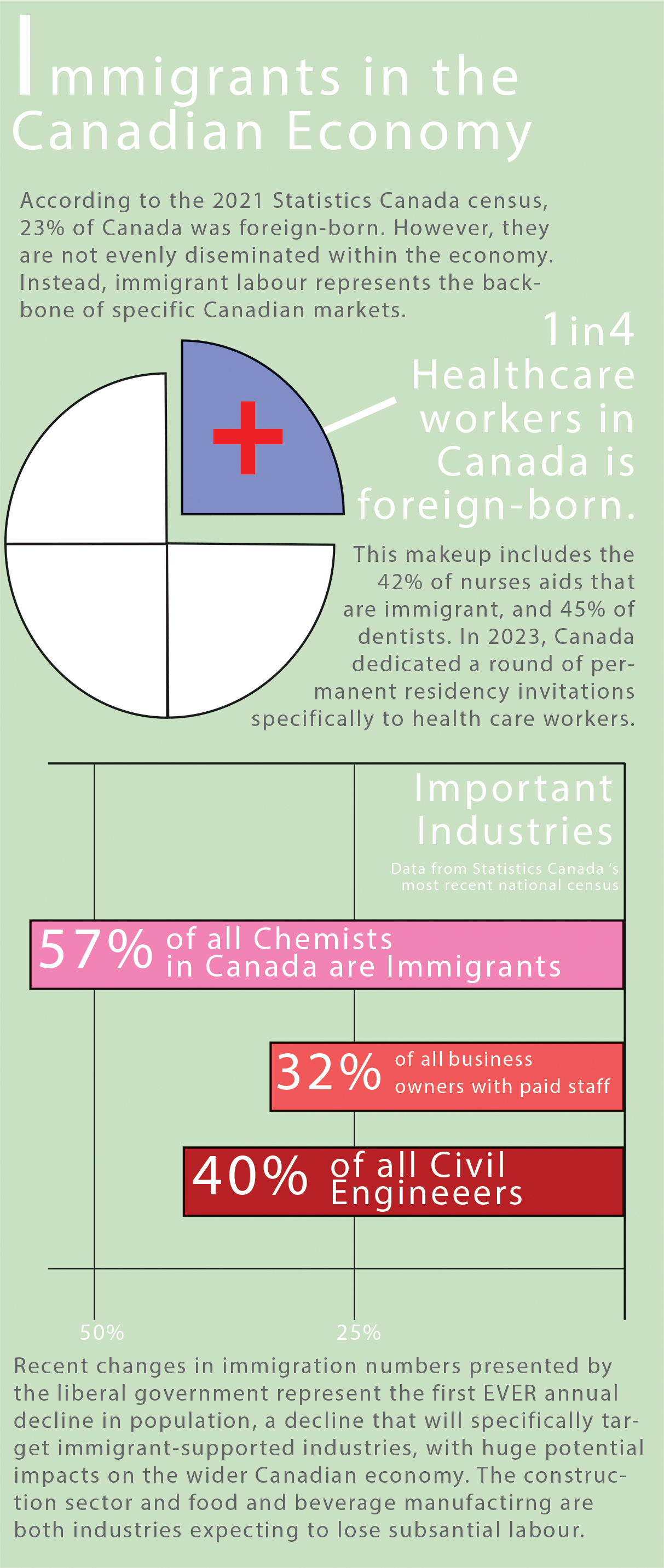
As life-changing assistance has been getting harder to secure, year after year, lower immigration numbers won’t change that, and it won’t build more infrastructure. It may very well result in less infrastructure being built given the high rate of immigrant employment in the construction sector.
As their funding lowers in tandem, lower immigration numbers won’t see these organizations any better equipped to provide for the people they need to. It won’t change the number of refugee claimants fleeing to Canada or how many of them end up in homeless shelters. Lower immigration numbers won’t clothe a newborn baby or keep them warm through their first snowfall. And so, year after year after year, providing that life-saving assistance continues to get harder.
CLIMATE REFUGEES
In 2022, the United Nations Refugee Agency reported 31.9 million people were internally displaced in their own borders due to climate-related disasters, a 41 per cent increase since 2008. Canadian law and international law, however, does not generally recognize climate as a valid cause for refugee status.
Claimants can only get the protections and support granted to refugees on the basis of violence or persecution. To be able to offer financial assistance, housing support or even simply legal migration to those fleeing weather events, a national-level policy must first be implemented allowing climate as a valid cause for a claim. The two axes of climate and violence are not as intrinsically separate as they may appear on the surface.
“Climate is causing conflict around the world,” says Ernst. “The first groups of people that we’ll be seeing that are climate refugees are due to that intersection.”
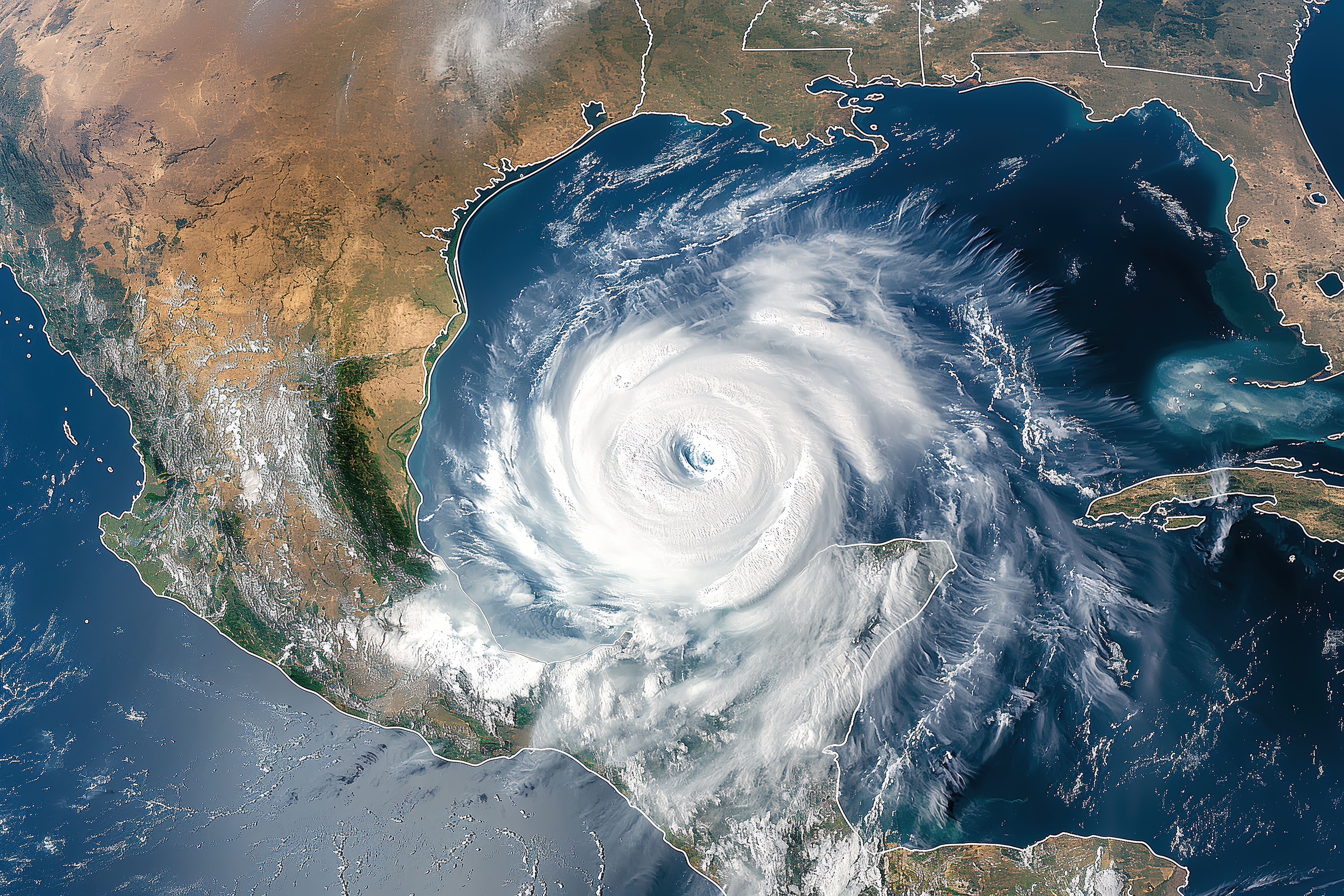
As the climate crisis continues, larger populations are beginning to be displaced into other territories. While population displacement is caused by hurricanes and wildfires, there is just as much displacement caused by less-dramatic weather events.
“The one people don’t think about is drought. Drought in places like Africa, the movement of people from one area to another because there’s nothing to eat, or there’s no water. You’re going to create conflict, right? Moving over borders and what-not,” says Wiebe.
Without legal recourse to seek asylum abroad, the potential for conflict resulting from the mass displacement is exacerbated. By not providing refugee status for weather-related events, governments are in turn propagating the violence and persecution they then allow people to flee from.
— a topic that was highlighted in the interim between Hurricane Helene and Hurricane Milton hitting Florida. Experts predicted the potential for catastrophic damage from the second hurricane’s impact. Florida meteorologist John Morales cried on live television.